in


What Is Ground School Training and What Do Student Pilots Learn?
Ground school training is the classroom part of pilot training. Student pilots learn the theory behind flying: how aircraft work, how weather behaves, how to plan a route and which rules apply in Indian airspace. It covers the subjects tested in the DGCA exams, so every student pilot needs it before getting a licence. In short, it’s what turns someone who likes planes into someone who understands them.
Why Do Student Pilots Need Ground School Training Before Flying?
Flying is not just about handling the controls. You need to know why the aircraft does what it does. That is what ground school is for.
When people ask what is ground school training really worth, our answer is simple. It’s the part that keeps you safe, confident and ready for the exams.
- It builds the base for every flying lesson
- It teaches the rules you must follow in the air and at the airport
- It prepares you for the DGCA theory exams, which you can’t skip
- It helps you make safer decisions when things don’t go as planned
- It makes radio calls, briefings and checklists feel normal, not scary
At Dunes Aviation Academy, ground school is the foundation of every pilot’s training. Our students build a clear understanding of aviation theory before they move on to flying, which helps them follow each lesson with confidence. A strong grasp of the basics also supports better decision-making in the cockpit.
What Subjects Are Covered in Ground School Training?
The exact depth depends on your course (PPL or CPL), but these are the core subjects:
- Air Navigation: reading charts, planning routes, working out time, distance and fuel
- Aviation Meteorology: weather, clouds, wind and visibility, and what they mean for a flight
- Air Regulations: DGCA rules, airspace, licensing and flight procedures
- Technical General: how aircraft, engines, instruments and basic systems work
- Technical Specific: details of the aircraft type you train on
- Radio Telephony: how to speak with air traffic control clearly and correctly
These subjects are not separate boxes. Weather affects your route, your route affects your fuel, and your fuel affects your decisions. Good ground school training helps you connect all of it.
How Is Ground School Training Taught at Dunes Aviation Academy?
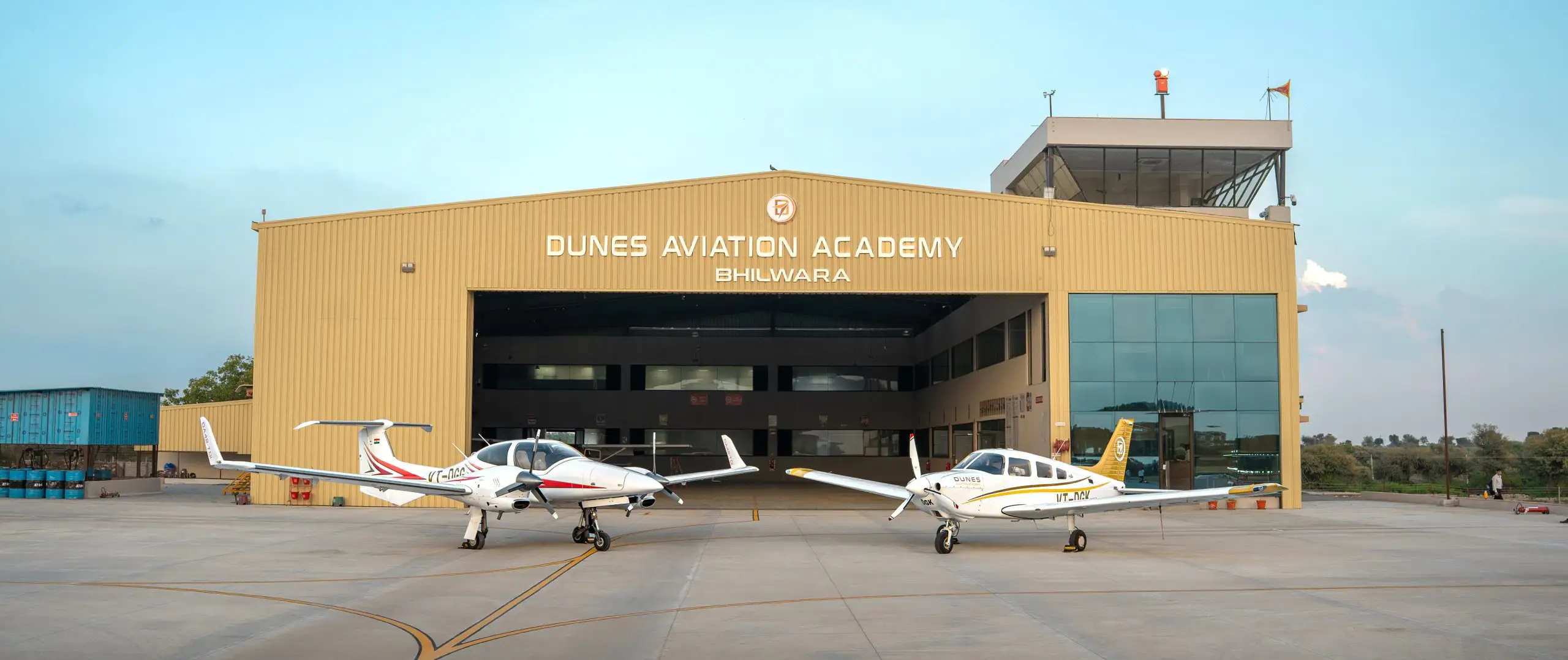
Dunes Aviation Academy is a DGCA-approved flying training organisation with bases at Bhavnagar Airport, Gujarat and Bhilwara Airstrip, Rajasthan. We want to train pilots to standards accepted around the world, and that starts in the classroom.
Here is how our ground training works:
- Structured classroom sessions covering all DGCA subjects
- Pre-flight briefings that prepare students for each flying session
- Standardisation classes that maintain a uniform training approach for every student
- Revision sessions and doubt-clearing support ahead of DGCA exams
- Academic guidance on progressing to the next stage of training, including PPL, CPL and further qualifications
Theory and practical flying are closely linked in our training. Concepts taught in the classroom are reinforced in the cockpit soon after, which helps students retain them better. Understanding crosswind techniques in theory is valuable, but applying them during an actual approach is what builds real competence.
How Long Does Ground School Take, and How Should You Prepare?
There’s no single number. It depends on your course, your batch and how fast you study.
What helps most:
- Study a little every day. Cramming doesn’t work for aviation theory.
- Practise DGCA-style questions often, not just once
- Ask your doubts early, not the week before the exam
- Link each topic to what you see during flying lessons
- Keep short notes of formulas and rules you tend to forget
- Revise old chapters while you learn new ones
One of the most common mistakes students make is skipping revision. After completing a subject, it’s easy to move on and let the details fade. A short weekly revision helps retain key concepts and reduces last-minute pressure before exams.
FAQs
1. What is ground school training in aviation?
Ground school training is the theory part of pilot training. Students learn navigation, weather, air regulations and aircraft systems. This prepares them for DGCA exams and for safe, confident flying.
2. Is ground school compulsory to become a pilot in India?
You must pass the DGCA theory exams to get a licence. Ground school is the most reliable way to prepare for them, and flying training organisation programmes include it. Self-study is possible, but it’s harder to stay on track.
3. What subjects do student pilots study in ground school?
Air Navigation, Aviation Meteorology, Air Regulations, Technical General, Technical Specific and Radio Telephony. The depth depends on whether you are training for a PPL or a CPL.
4. Can I do ground school and flying training together?
In many programmes, theory and flying run side by side so each lesson supports the other. Contact our team to check the batch and schedule that suit you.
5. Does Dunes Aviation Academy offer ground school training?
Yes. Our ground training covers DGCA papers, pre-flight briefings and standardisation classes. Flying training takes place at our Bhavnagar and Bhilwara bases.
Ready to Start Your Ground School Training?
Ground school training is the foundation of every pilot’s career. It gives student pilots the theoretical knowledge they need to train with confidence and fly safely. A strong start in the classroom makes every later stage of training easier, and the knowledge gained here stays relevant throughout a pilot’s flying career.
If you’re ready to begin your pilot training with one of the best flying schools in India, our team is here to guide you on courses, batches and the next steps. Contact us with any questions about the programme.
Tags :
example, category, and, terms